Welcome to Law and Disorder Radio
Law and Disorder is a weekly independent civil liberties radio program airing on more than 150 stations and on Apple podcast. Law and Disorder provides timely legal perspectives on issues concerning civil liberties, privacy, right to dissent and practices of torture exercised by the US government and private corporations.
Law and Disorder October 26, 2026
Podcast: Play in new window | Download
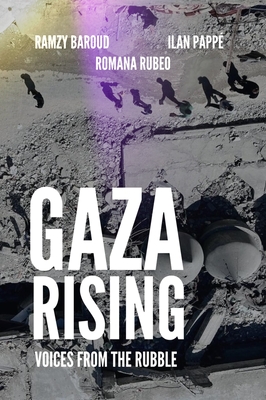
Gaza Rising: Voices From the Rubble
As Israel continues to perpetrate its genocide in Gaza and atrocities in the West Bank, support for Palestinian liberation and sovereignty is growing around the world and in the United States. In July, Pew Research Center survey found unfavorable views of Israel at 62% among Americans and a recent Gallup Poll found for the first time, that US sympathy now leans toward the Palestinians (41%) compared to Israel (36%). This trend is due in great part to the unrelenting and outspoken defense of the Palestinian cause from prominent voices such as our guest today Dr. Ramzy Baroud. Dr. Baroud is a Palestinian author, historian, and academic whose work focuses on Palestinian history and liberation. He is the Editor of The Palestine Chronicle, which he has led since 1999, and has spent decades developing an alternative historical narrative centered on lived Palestinian experience rather than elite political frameworks.
Dr Baroud holds a Ph.D. in Palestine Studies from the University of Exeter. He has taught mass communication at Curtin University and serves as a Non-Resident Senior Research Fellow at the Center for Islam and Global Affairs (CIGA) at Istanbul Zaim University. His scholarship bridges journalism and academia, and his work has appeared in numerous academic journals and edited volumes.
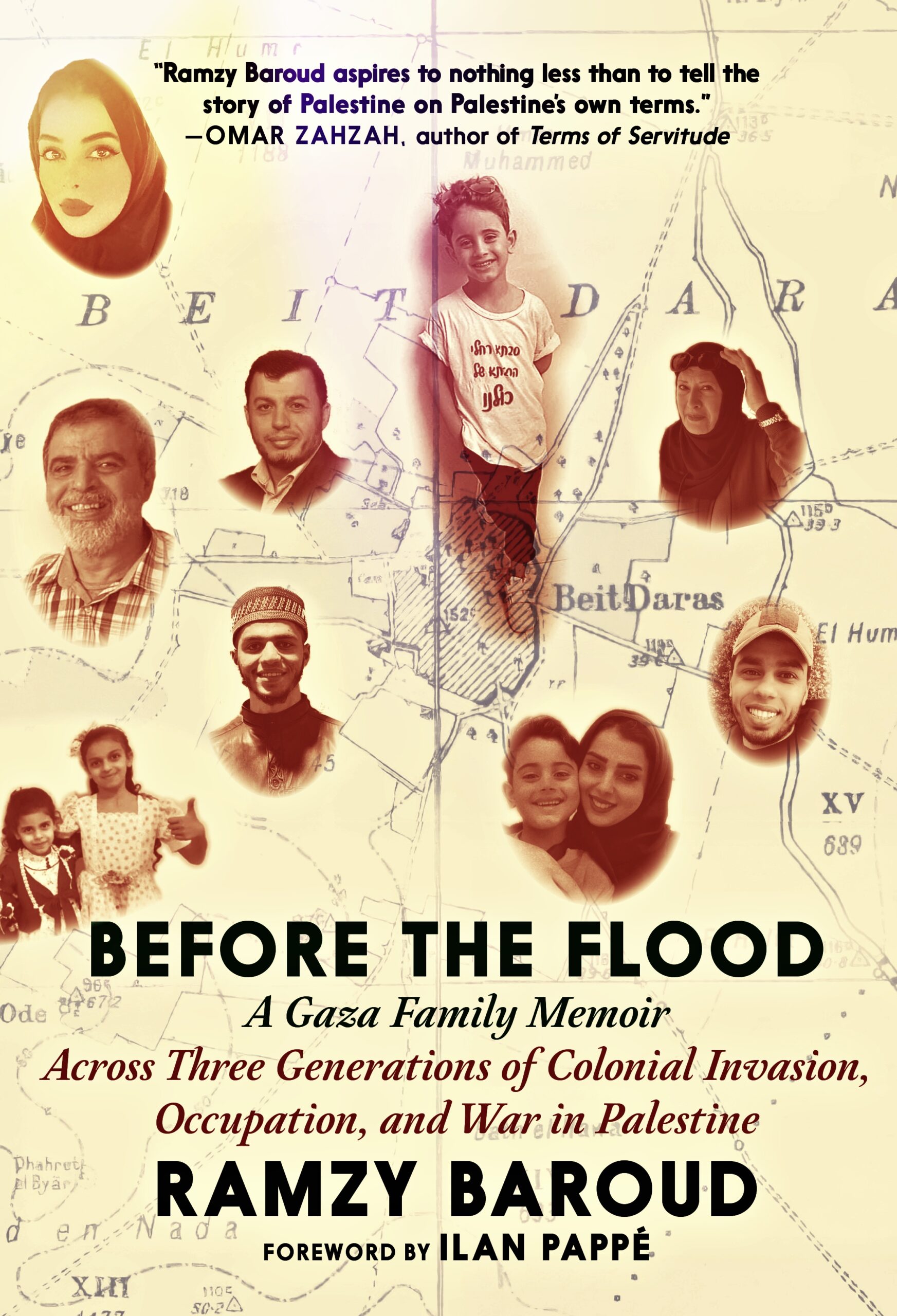
He is the author of eight books. He has just published two new books, Before the Flood (from Seven Stories Press), which reconstructs Gaza’s modern history through family memory and intergenerational testimony, and Gaza Rising: Voices From the Rubble.(from Clarity Press). His earlier works include Searching Jenin, The Second Palestinian Intifada, My Father Was a Freedom Fighter, The Last Earth, and These Chains Will Be Broken. He is also the co-editor, with Ilan Pappé, of Our Vision for Liberation.
Guest – Dr Ramzy Baroud’s writing has been translated into multiple languages and widely published internationally. His work combines historical analysis, oral history, and political interpretation, contributing to global debates on settler colonialism, resistance, and liberation movements. He has lectured extensively at universities, research centers, and public institutions across North America, Europe, Africa, Asia, and Australia, contributing to global discussions on Palestine, decolonization, media, and popular resistance. His public scholarship places academic research in conversation with civil society audiences, activist communities, and policy forums.
—-
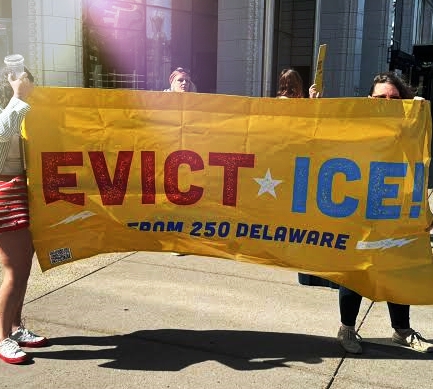
Buffalo Activist Coalition Demands Uniland Developer Not Lease Space To ICE
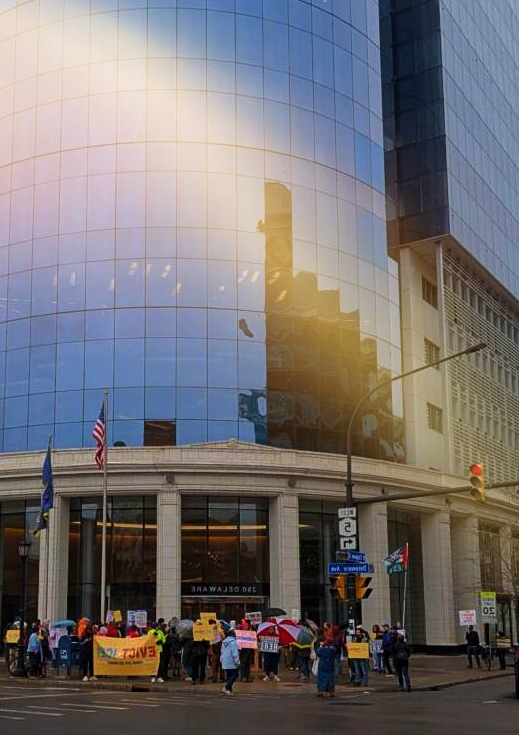
In Buffalo, New York, a coalition of activists, community organizations, and small businesses is taking on powerful real estate developer Uniland over its decision to lease space to Immigration and Customs Enforcement (ICE). The coalition, Evict ICE from 250 Delaware, is demanding that Uniland end ICE’s lease at a downtown building. Federal immigrations operations there include detention holding rooms and the coordination of arrests and deportations across much of New York State outside New York City.
The campaign is also challenging the local business establishment that profits from these arrangements. Last week, activists took their protest directly to a Buffalo Business Hall of Fame banquet, where Uniland executive chairman Carl Montante was being honored. Some campaign members entered the banquet as guests and confronted the proceedings, while others held a parallel “Hall of Shame” protest outside.
The coalition’s demand is straightforward: ICE out of 250 Delaware when the lease expires in March 2027. But the campaign raises larger questions about corporate responsibility, public subsidies, immigration enforcement, and what ordinary people can do when powerful institutions refuse to listen.
Guest – Holly Verrett, Lackawanna resident, revolutionary activist, and gardener, Holly is committed to building stronger communities and fostering a love of nature. She is also the proud wife of Tony and mother to their daughter, Alice.

Law and Disorder October 19, 2026
Podcast: Play in new window | Download
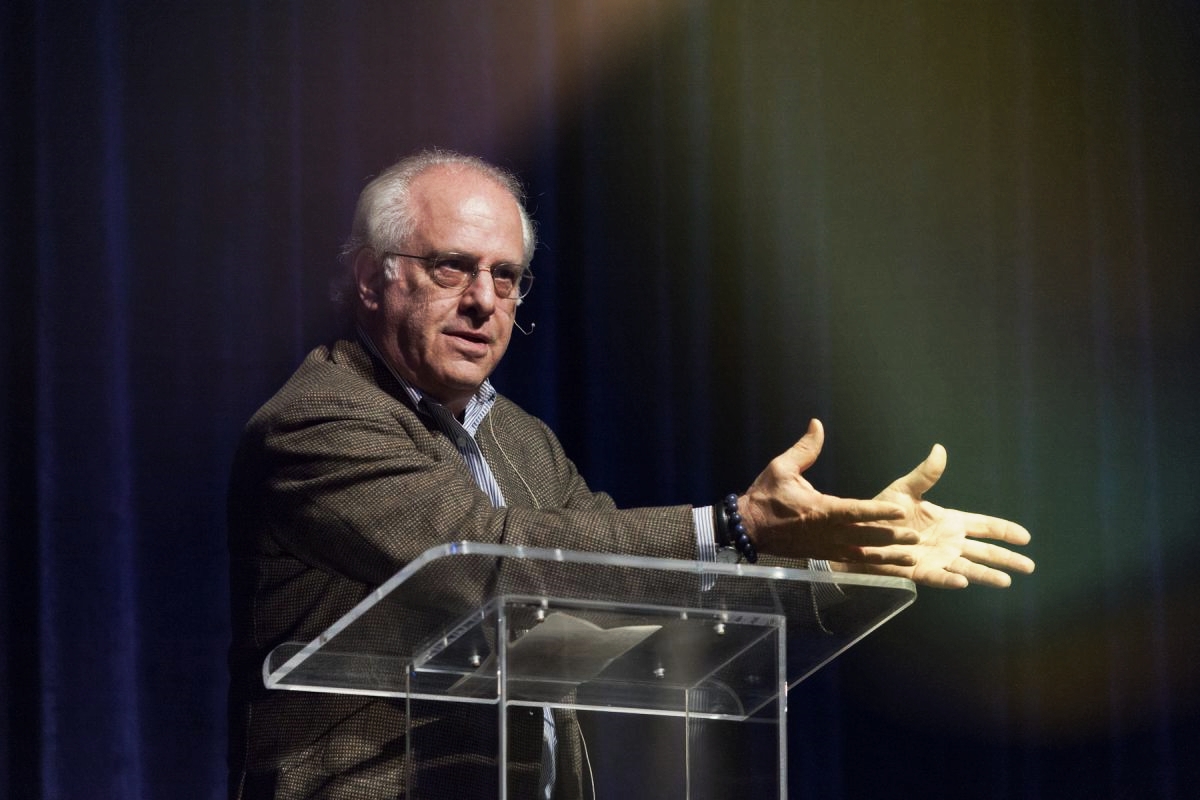
Understanding Trump Era Capitalism
Just prior to the 2024 presidential election, we interviewed seven leading socialist thinkers and activists on whether, and if so to what degree, they were fearful that if Trump was elected to a second term America’s already weakened democracy would be further weaken and if so, to that extent. And did they think Trump was essentially a would-be fascistic, authoritarian president. Our guests in the past number of weeks were Chris Hedges, Dianne Feeley, Henry Giroux, Bill Mullen, Margaret Kimberley, Kshama Sawant and Richard Wolff. All of them felt Trump and the Project 2025 proposals he was promoting suggested he would, if elected, demonstrate fascistic and authoritarian desires, and act accordingly.
After the election, OR Books published the book, From the Flag to the Cross: Fascism American Style, which provided, in essay form, the contents of the interviews of those seven guests. Today, we interview one of those guests, Richard Wolff on to what extent his fears about Trump’s politics and manner of rule has come to pass and if so, in what ways and to ask him the best ways to fight back against the actions and policies of the Trump Administration.
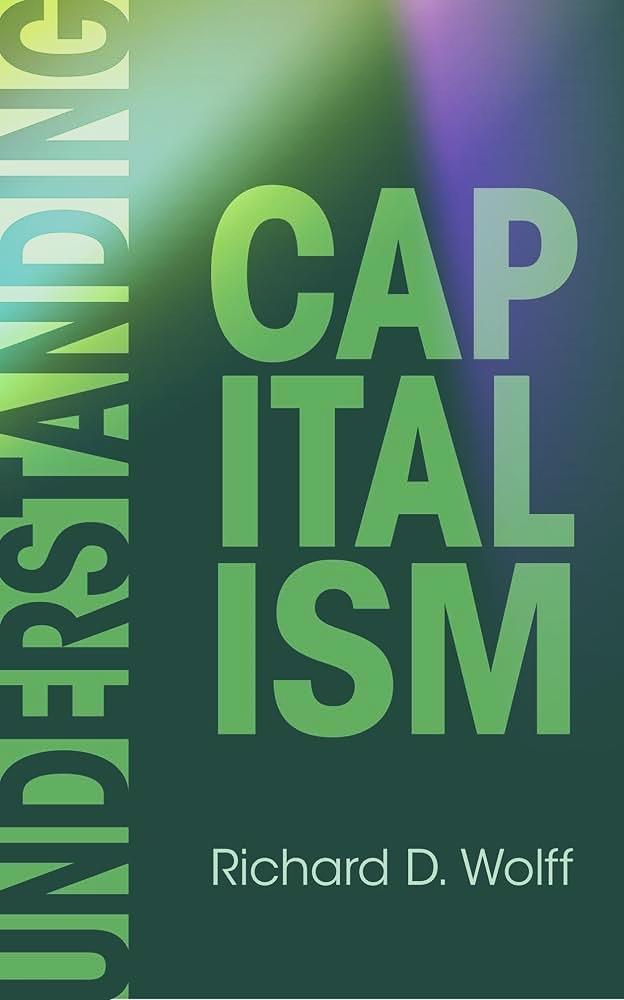
Guest – Richard Wolff is Professor Emeritus from the University of Massachusetts, and the author of Understanding Capitalism. According to New York Times, Richard Wolff is, probably America’s most prominent Marxist economist. He is the founder of Democracy at Work and host of their national syndicated show Economic Update. Professor Wolff has authorized numerous books on capitalism and socialism, including most recently The Sickness is the System: When Capitalism Fails to Save Us From Pandemics or Itself, Understanding Socialism; and Understanding Marxism, which can be found at democracyatwork.info.
—-
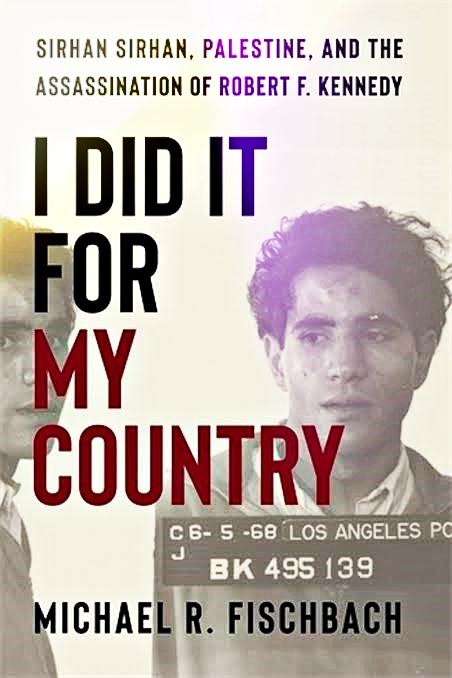
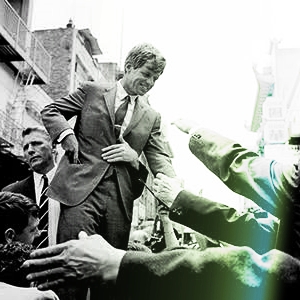
I Did It for My Country: Sirhan Sirhan, Palestine, and the Assassination of Robert F. Kennedy
Historian Michael Fischbach’s new book I Did It For My Country is on the 1968 assassination of Robert Kennedy by Sirhan Sirhan. He was a Palestinian refugee who shot RFK in the head at a Los Angeles hotel the night Kennedy won the California presidential primary.
Sirhan and his family were driven out of their native country of Palestine by Zionist settlers in 1948. History Professor Michael Fishbach’s book is a unique contribution to our understanding of the unfolding of the tragedy of relatively recent American history. It is unique because of the many books written on the assassination Professor Fischbach’s book is the only one that puts it in the context of the Palestinian catastrophe. In 1948, 750,000 Palestinians were driven from their native land. More than 500 villages were plowed over to establish Israel on the false Zionist slogan that they were “making a country for a people without a land on a land without a people.“
When Robert Kennedy was murdered the night he won to California primary he was destined to become the next United States president. Had he become president modern American history would’ve turned out differently. Robert Kennedy‘s brother John F. Kennedy had been assassinated by elements within the CIA five years before. It Is the consensus of knowledgeable people that JFK was killed because he was trying to pursue peace in Vietnam, Cuba, and especially with Russia.
JFK signed a national security Memorandum in 1963 stating his intention to withdraw all American troops from Vietnam. Instead Lyndon Johnson who succeeded Kennedy escalated the war in Vietnam, which killed 3 million Vietnamese and 53,000 American soldiers before United States was forced out in 1975. Historically “blowback” is understood as the unintended consequences of a foreign policy action. Robert Kennedy’s murder was a blowback phenomenon. In this case, it was America’s unwavering support from 1948 on to establishment of Israel. When Sirhan killed Kennedy yelled out “I did it for my country.” The centrality of American military , diplomatic, and economic support of Israel was never brought to the fore.
Guest – Michael R. Fischbach is professor of history at Randolph-Macon College. His books include The Movement and the Middle East: How the Arab-Israeli Conflict Divided the American Left.
————–
Law and Disorder October 12, 2026
Podcast: Play in new window | Download
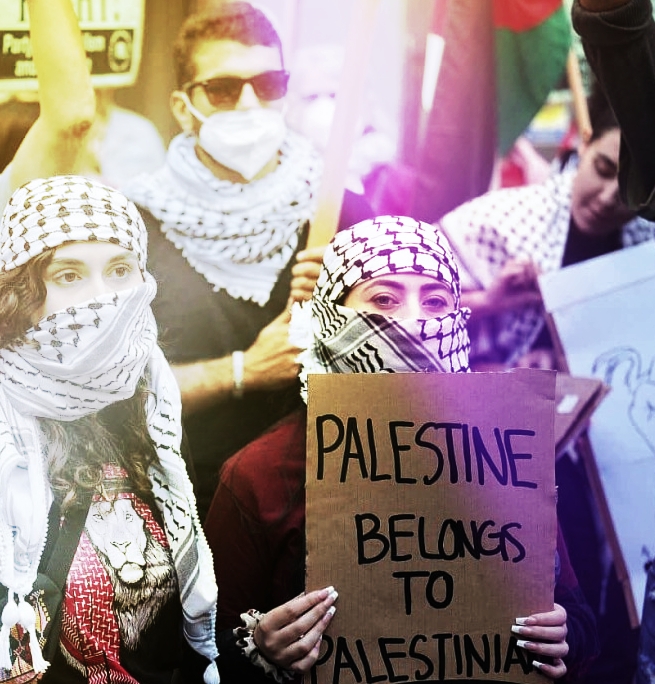
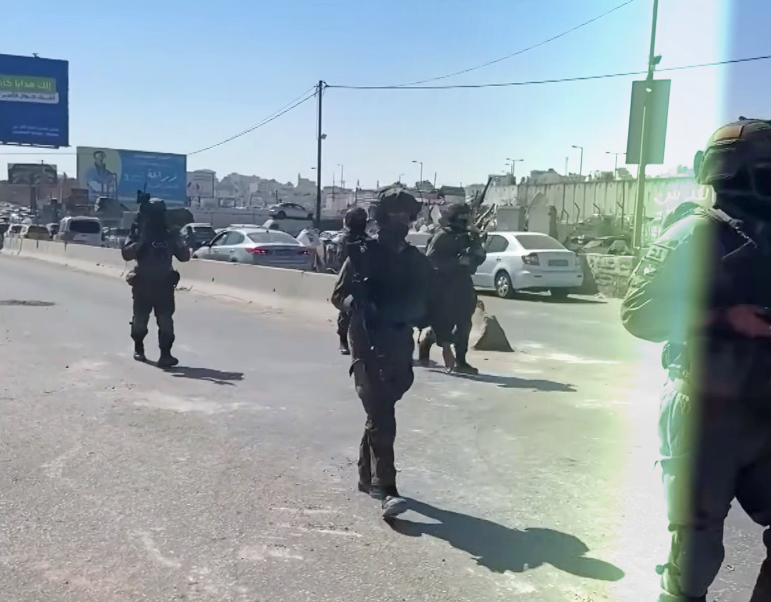
The FACE Act Cited As Religious Protection Against Protesters Of Israeli Land Sale In Palestine
Passed in 1994 in response to violent and obstructive protests at reproductive-health clinics, the federal FACE Act (Freedom of Access to Clinic Entrances Act) also protects people exercising their First Amendment right to religious freedom at places of worship. The law has now become the latest battleground over protest and free speech.
The government has claimed that the Party for Socialism and Liberation New Jersey, or PSL-NJ, published a social media post calling for a public protest against a real estate event involving the sale of property in an Israeli settlement in the occupied West Bank. The Trump Administration’s Justice Department filed a federal lawsuit under the FACE Act, arguing that the protest violated the law’s protections for religious worship. Their argument was an unusual one.
Guest – Attorney Mara Verheyden-Hilliard, Executive Director of the Partnership for Civil Justice Fund and the Center for Protest Law and Litigation in Washington DC. In addition to serving as counsel for PSL-NJ in this case, Mara has spent decades defending protesters and political movements against government surveillance, repression and unconstitutional restrictions on speech.
—-
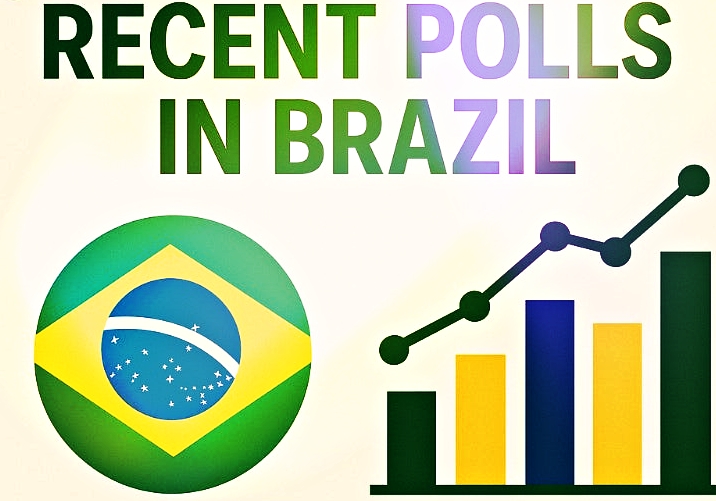
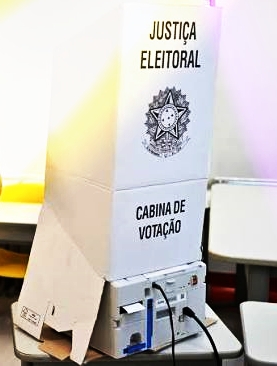
Geopolitical Shift In Balance As Brazil Elections Underway
We go south, to Brazil. Following its first-round presidential election on October 4th, incumbent President Luiz Inácio Lula da Silva and challenger Flávio Bolsonaro—son of former president Jair Bolsonaro—are officially heading to a runoff. It is an incredibly tight race, with Bolsonaro securing approximately 47% against Lula’s 45% of the vote.
Against this electoral backdrop, relations between Brazil and the US remain fraught with tension. Remember—they’re the two largest democracies in the Western Hemisphere, so mounting friction with Washington continues to open up key diplomatic and economic opportunities for Brazil with China. What does this runoff and geopolitical shift mean for the future of Latin American democracy, global trade, and Washington’s influence in the region?
Guest – James N. Green, Professor Green is Emeritus Professor of Brazilian History and Culture at Brown University, where he was also director of the Brazil Initiative. He’s spent decades studying Brazil’s political and social transformations—from the military dictatorship years to today’s high-stakes election.
———————